🦍 Wildlife of Guinea A Complete Guide to Guinea's Extraordinary Biodiversity
Guinea is a country of remarkable natural richness.
Its landscapes may be best known for mountains, rivers and forests, but hidden within these environments is another extraordinary treasure: a wildlife heritage that ranks among the most important in West Africa.
From the rainforests of the southeast to the highlands of Fouta Djallon, from the savannahs of Upper Guinea to the Atlantic coastline, Guinea contains an impressive variety of habitats. Each supports different communities of animals, birds and plants, many of which are rare, threatened or found only within this region of Africa.
For many visitors, Guinea's wildlife remains a discovery waiting to happen.
The country is home to:
- western chimpanzees living in their natural habitat
- forest elephants
- hippos
- rare primates
- colourful tropical birds
- unique amphibians
- marine and coastal species
- thousands of plant species
Protecting this biodiversity is not only important for Guinea. It is essential for the future of West Africa's natural heritage.
A Country of Extraordinary Habitats
Guinea's wildlife diversity exists because the country contains several major ecosystems.
The Upper Guinean Forests
The forests of southeastern Guinea are among the most important remaining tropical forests in West Africa.
Once stretching across a much larger area, these forests now survive mainly in protected areas such as:
- Mount Nimba
- Ziama Biosphere Reserve
- surrounding forest landscapes
They provide habitat for some of Africa's most threatened species.
Fouta Djallon Highlands
The mountains and valleys of Fouta Djallon create unique environments of forests, rivers and grasslands.
This region supports:
- forest birds
- amphibians
- reptiles
- small mammals
The waterfalls and rivers also create important habitats for aquatic species.
Savannah and River Landscapes
Eastern Guinea contains extensive savannah ecosystems, especially around protected areas such as Haut Niger National Park.
These landscapes support:
- antelopes
- primates
- large mammals
- water-dependent species
Coastal and Marine Environments
Guinea's Atlantic coastline contains mangroves, estuaries and wetlands.
These environments are essential for:
- migratory birds
- fish species
- reptiles
- coastal wildlife
The Western Chimpanzee
Guinea's Most Famous Primate
Among Guinea's most remarkable animals is the western chimpanzee (Pan troglodytes verus).
This subspecies of chimpanzee is one of humanity's closest living relatives and is considered critically endangered.
Guinea remains one of the most important countries for western chimpanzee conservation.
Chimpanzees of Guinea's Forests
Western chimpanzees survive particularly in areas such as:
- Mount Nimba
- Bossou
- Ziama
- Upper Guinea forest regions
The chimpanzees of Bossou are especially famous because researchers have studied their behaviour for decades.
These chimpanzees have demonstrated remarkable intelligence, including:
- tool use
- complex social behaviour
- cultural traditions passed between generations
Their survival depends on protecting the forests they call home.
Forest Elephants
Although populations have declined dramatically across West Africa, forest elephants remain an important part of Guinea's natural heritage.
These elephants are smaller than their savannah relatives and are adapted to life in dense forests.
They play a vital ecological role by:
- spreading seeds
- shaping forest environments
- maintaining biodiversity
Forest elephants face serious challenges from habitat loss and illegal hunting, making conservation efforts essential.
Hippopotamuses of Guinea
Guinea's rivers and wetlands provide habitat for both common and rare hippo populations.
The hippopotamus (Hippopotamus amphibius) is especially associated with river systems and protected areas.
The Haut Niger region is one of the important areas for these impressive animals.
Despite their peaceful appearance, hippos are powerful creatures and play an important role in aquatic ecosystems.
Guinea's Primates
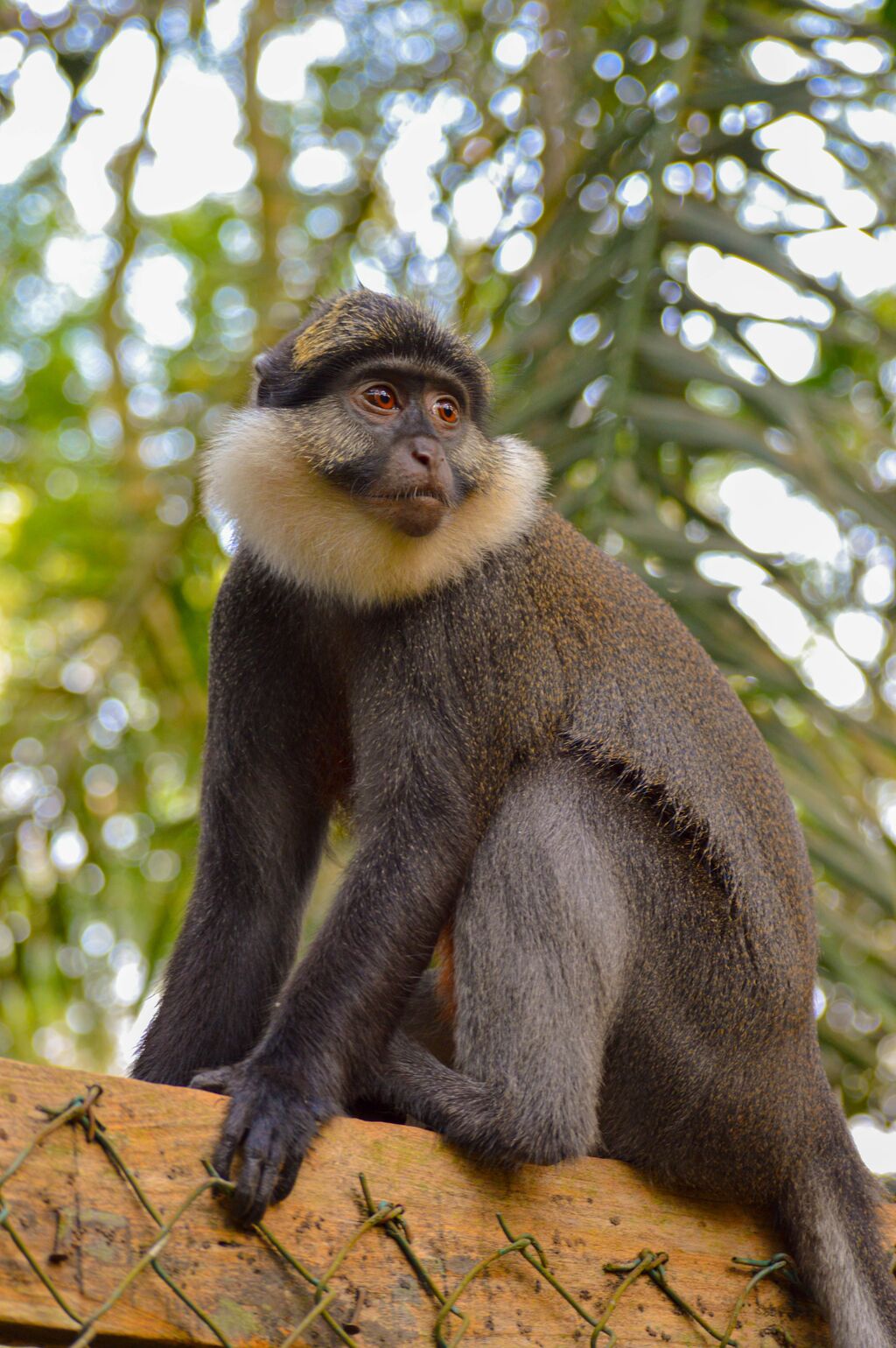
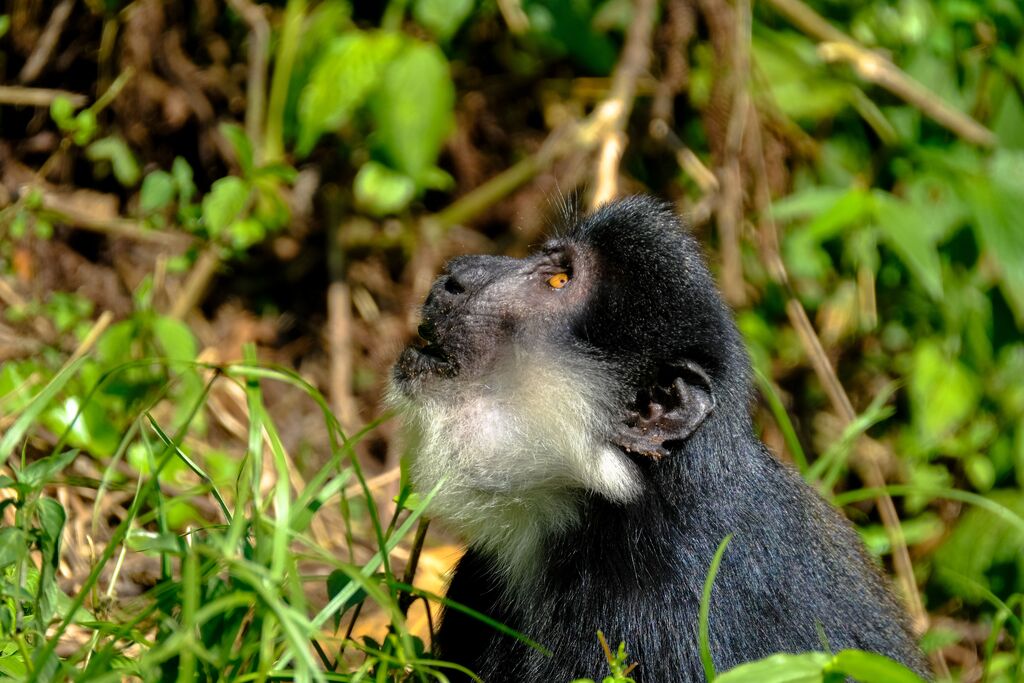
Beyond chimpanzees, Guinea supports several other primate species.
These include:
Diana Monkey
The Diana monkey (Cercopithecus diana) is one of West Africa's most striking primates.
Recognised by its contrasting black, white and reddish markings, it depends on forest habitats and is considered threatened.
Mona Monkey
The mona monkey (Cercopithecus mona) is found in forest environments and is known for its distinctive facial markings.
Colobus Monkeys
Guinea's forests are also home to colobus monkeys, including species within the red colobus group
These primates are among Africa's most threatened monkeys because of forest loss.
The Birds of Guinea
Guinea is a paradise for birdwatchers.
Its position between coastal wetlands, forests and savannahs creates habitats for hundreds of bird species.
Some are widespread African species, while others are rare birds of exceptional conservation importance.
Rare and Notable Birds of Guinea
White-necked Picathartes
(Picathartes gymnocephalus)
One of West Africa's most famous and unusual birds.
The white-necked picathartes is a rare forest bird found only in parts of Upper Guinea, including suitable habitats in Guinea.
It is famous for:
- its unusual appearance
- rocky forest nesting sites
- secretive behaviour
Because it depends on undisturbed forest, it has become a symbol of rainforest conservation.
Yellow-bearded Greenbul
(Criniger olivaceus)
A rare forest bird of the Upper Guinean forests.
This species depends on mature rainforest habitats and is considered threatened due to habitat loss.
Nimba Flycatcher
(Melaenornis annamarulae)
One of Guinea's most special birds.
Associated with the Mount Nimba region, this small bird has a very limited distribution and represents the unique biodiversity of this mountain ecosystem.
Gola Malimbe
(Malimbus ballmanni)
A beautifully coloured bird associated with Upper Guinean forest habitats.
Its survival depends on protecting remaining rainforest areas.
Rufous Fishing Owl
(Scotopelia ussheri)
One of Africa's rarest owls.
This impressive bird lives near rivers and forest streams and is highly dependent on intact rainforest environments.
White-breasted Guineafowl
(Agelastes meleagrides)
A rare ground-dwelling bird of West African forests.
Guinea is among the countries where conservation efforts aim to protect this species and its habitat.
Reptiles and Amphibians
Guinea's forests and mountains are also home to remarkable reptiles and amphibians.
Among the most famous is:
Nimba Toad
(Nimbaphrynoides occidentalis)
Found around Mount Nimba, this unusual amphibian is famous because it gives birth to live young rather than laying eggs.
It is one of the clearest examples of how isolated mountain ecosystems can create unique species.
Other reptiles and amphibians include:
- forest frogs
- chameleons
- snakes
- lizards
Many remain poorly studied.
Marine and Coastal Wildlife
Guinea's Atlantic coastline supports important marine ecosystems.
The mangroves and coastal waters provide habitat for:
- fish species
- crabs
- shellfish
- coastal birds
- marine reptiles
The coastal environment also supports communities whose traditions and livelihoods are closely connected with the sea.
Conservation Challenges
Guinea's wildlife faces many pressures.
These include:
- deforestation
- agricultural expansion
- illegal hunting
- mining activities
- climate change
- habitat fragmentation
The survival of many species depends on maintaining protected areas and working with local communities.
Conservation is most successful when communities benefit from protecting nature.
Continue ReadingGUINEAPEDIA Tips – Explore Guinea
Wildlife Tourism in Guinea
Guinea has enormous potential for responsible wildlife tourism.
Visitors can experience:
- chimpanzee observation
- rainforest exploration
- birdwatching
- mountain landscapes
- river ecosystems
Unlike some better-known safari destinations, Guinea offers something different: the opportunity to discover rare species in landscapes that remain relatively unexplored.
Protecting Guinea's Natural Heritage
Guinea's wildlife represents millions of years of evolution and countless generations of natural history.
A chimpanzee moving through a forest canopy, a rare bird calling from an ancient tree, or a hippo moving through a river are not simply attractions.
They are living symbols of Guinea's natural identity.
The protection of these species ensures that future generations can continue to experience the extraordinary biodiversity of this remarkable West African country.
Guinea's forests, rivers and mountains are not only places on a map.
They are places alive with stories.