🏛 The Complete History of Guinea From Ancient Kingdoms to the Modern Republic
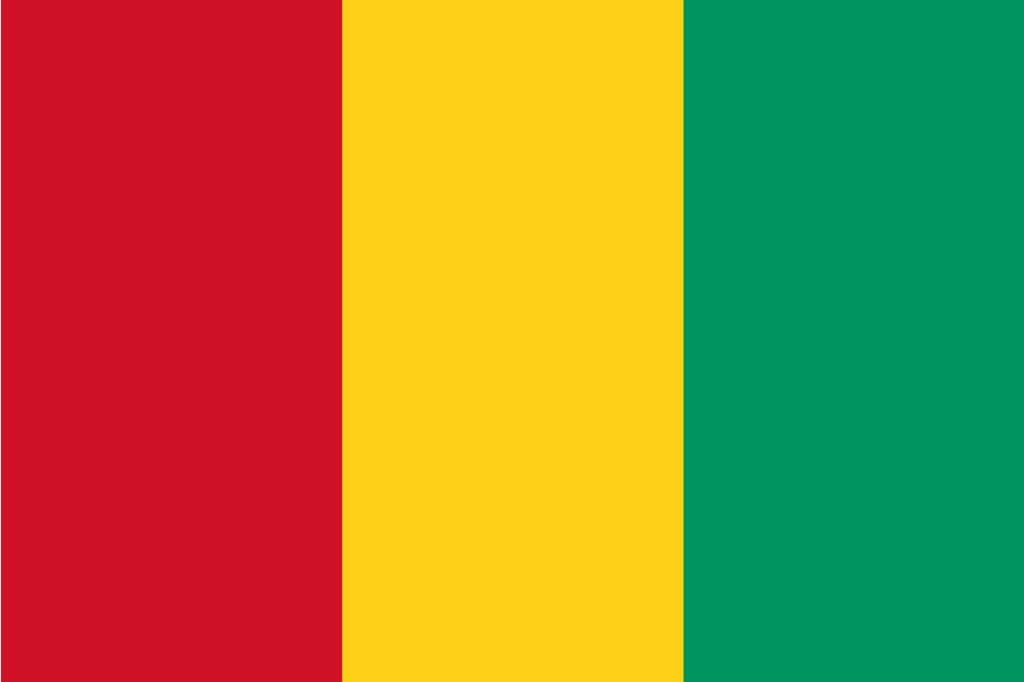
Guinea's history is a story of movement, exchange and transformation.
Long before the borders of the modern Republic of Guinea existed, the lands between the Atlantic Ocean and the interior highlands were home to communities with their own traditions, political systems and connections to the wider world. Rivers carried people and ideas across the region. Trade routes linked the forests, savannahs and mountains of West Africa. Kingdoms rose and fell, scholars travelled, cultures blended, and generations built societies adapted to one of Africa's most diverse environments.
The Guinea of today is the result of thousands of years of human history: ancient settlement, powerful West African empires, Islamic scholarship, European contact, French colonial rule, independence and the continuing search for national identity.
To understand Guinea is to understand a country shaped by both its own unique heritage and its deep connections to the wider history of West Africa.
The Ancient Roots of Guinea
Human history in the region that is now Guinea stretches back thousands of years.
Archaeological evidence shows that communities lived across West Africa long before written records existed. The fertile areas around rivers, forests and highlands provided resources that supported hunting, fishing, agriculture and settlement.
The geography of Guinea played an important role in early human life. The country's mountains, rivers and forests created diverse environments where communities developed different ways of living.
The rich ecosystems of the region provided:
- fertile agricultural land
- abundant water resources
- forests containing valuable materials
- routes of movement and exchange
Over time, communities developed distinctive languages, traditions and social structures that would become the foundation of Guinea's cultural diversity.
Early Peoples and Cultural Foundations
The history of Guinea is inseparable from the history of the wider Upper Guinea region of West Africa.
Over centuries, different peoples settled, migrated and interacted across the area. Among the communities whose histories became closely connected with the region were:
- Malinké (Mandinka)
- Susu
- Fulani (Fula)
- Kissi
- Baga
- Toma
- Guerzé (Kpelle)
- and many others
Each community developed its own traditions, systems of leadership, artistic expressions and relationship with the land.
Oral traditions played a central role in preserving history. Generations of storytellers, musicians and elders maintained knowledge about ancestors, migrations, important events and cultural values.
In many parts of Guinea, history was not only recorded in written documents—it was carried through voices, songs, ceremonies and collective memory.
Guinea and the Great West African Empires
The territory of modern Guinea was connected to some of the most influential empires in African history.
Although many of these empires were centred outside Guinea's present borders, their influence reached deep into the region through trade, politics, religion and cultural exchange.
The Ghana (GANA) Empire
The ancient Ghana Empire, which flourished between approximately the eighth and thirteenth centuries, became one of West Africa's earliest great states. (Not the same as modern Ghana today!)
Its wealth came largely from trans-Saharan trade, particularly the exchange of gold and other valuable goods.
The influence of Ghana reached parts of the wider Upper Guinea region, connecting communities to broader networks of commerce.
The Mali Empire
The rise of the Mali Empire transformed West Africa.
Beginning in the thirteenth century, Mali became one of the world's most powerful medieval states. Under rulers such as Sundiata Keita and later Mansa Musa, the empire expanded across a vast territory.
The Guinea region was deeply connected with Mali's history.
The Mandinka people, whose traditions remain central to Guinea's cultural identity, were closely associated with the empire's expansion.
Mali's influence brought:
- expanded trade networks
- new political structures
- Islamic scholarship
- artistic and cultural development
The famous epic of Sundiata Keita remains one of West Africa's greatest oral traditions and continues to be performed by griots—traditional historians and storytellers.
The Songhai Empire
Later, the Songhai Empire became another major power in West Africa.
Although its centre was further east along the Niger River, its influence formed part of the wider historical world connected through trade and intellectual exchange.
The Rise of Fouta Djallon
One of the most important chapters in Guinea's history took place in the mountainous region of Fouta Djallon.
From the seventeenth century onwards, Fulani communities established themselves increasingly in the highlands. Over time, religious, political and social changes led to the creation of the Imamate of Fouta Djallon in the eighteenth century.
Founded in 1727 under the leadership of Karamokho Alfa and later strengthened under leaders such as Ibrahim Sori, the Imamate became a powerful Islamic state.
Fouta Djallon developed into:
- a centre of Islamic learning
- an important political power
- a region of agricultural importance
- a cultural heartland for Fulani communities
The state's influence extended beyond the mountains, shaping politics and society throughout much of modern Guinea.
The legacy of Fouta Djallon remains visible today in its architecture, traditions, scholarship and cultural identity.
Trade, Islam and Cultural Exchange
For centuries, Guinea existed within networks connecting West Africa's interior with Atlantic and trans-Saharan worlds.
Trade brought the exchange of:
- gold
- salt
- agricultural products
- textiles
- knowledge
- religious ideas
Islam gradually spread through trade routes and scholarship. Islamic education became especially influential in regions such as Fouta Djallon and among Mandinka communities.
At the same time, many traditional beliefs and practices continued, creating the rich cultural mixture that characterises Guinea today.
European Contact and the Atlantic Coast
European contact with the Guinean coast increased from the fifteenth century onwards.
Portuguese navigators were among the first Europeans to establish relationships along the West African coastline. Later, other European powers became involved in trade.
The Atlantic coast became part of wider global networks, including the tragic history of the transatlantic slave trade.
Many communities across West Africa were affected by this period of exploitation and forced migration. The consequences shaped societies on both sides of the Atlantic and remain an important part of historical understanding.
French Colonial Rule
During the nineteenth century, European competition for influence in Africa intensified.
France gradually expanded its control over territories that would become French Guinea. Through military campaigns, political agreements and colonial administration, France established authority over the region.
In 1891, French Guinea became a separate French colony.
Colonial rule brought major changes:
- new administrative systems
- infrastructure projects
- expansion of French education
- economic exploitation of natural resources
- changes to traditional political structures
The colonial economy focused heavily on extracting resources and developing agriculture for export.
At the same time, new educated groups emerged, eventually becoming important voices in the movement toward independence.
The Road to Independence
The twentieth century saw growing demands for political rights and self-determination across Africa.
In French Guinea, one of the most influential figures was Ahmed Sékou Touré, leader of the Democratic Party of Guinea (PDG).
In 1958, France proposed a new constitutional arrangement for its African colonies. Guinea became the only French territory in sub-Saharan Africa to reject continued membership in the French Community.
On 2 October 1958, Guinea became independent.
Ahmed Sékou Touré became the country's first president.
Independence was celebrated as a historic moment, not only for Guinea but throughout Africa. Guinea's decision represented a powerful statement about sovereignty and self-determination.
Continue ReadingGUINEAPEDIA Tips – Explore Guinea
Guinea After Independence
The early years of independence were marked by major political and economic challenges.
The government pursued a strongly independent path, seeking to develop the country while reducing foreign influence.
Under Sékou Touré's leadership, Guinea adopted a socialist-oriented political system. The period was characterised by:
- ambitious national development plans
- strong state control of the economy
- political tensions
- difficult relations with some international partners
Guinea also played an important role in African political movements, supporting independence struggles elsewhere on the continent.
Political Change and the Modern Republic
After Sékou Touré's death in 1984, Guinea entered a new political era.
Military rule followed under Lansana Conté, who led the country for more than two decades.
The early twenty-first century brought further political changes, including periods of reform, elections and renewed military involvement.
Guinea continues to navigate the challenges common to many developing nations:
- economic development
- democratic institutions
- natural resource management
- infrastructure growth
- social progress
At the same time, the country possesses enormous potential through its young population, cultural richness, agricultural possibilities and mineral resources.
Guinea's Historical Legacy
The history of Guinea cannot be reduced to political events alone.
It is also the story of:
- ancient communities connected to the land
- kingdoms and empires that shaped West Africa
- scholars and storytellers preserving knowledge
- communities protecting traditions
- artists creating new expressions from old roots
- generations building a national identity
From the mountains of Fouta Djallon to the forests of the southeast and the Atlantic coastline, Guinea's past continues to influence its present.
Understanding this history is essential to understanding Guinea itself.
The modern republic is not separate from the centuries that came before it—it is the continuation of a much longer story.