👑 Kingdoms & Empires of Guinea The Rise and Legacy of West Africa's Great Kingdoms
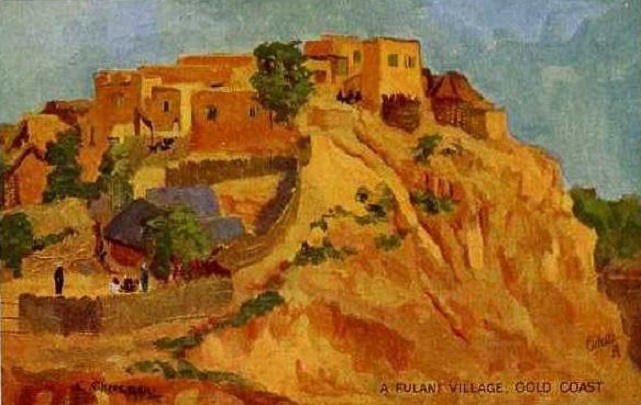
The history of Guinea did not begin with the creation of modern borders.
Long before the Republic of Guinea existed, the lands between the Atlantic Ocean, the great rivers and the mountain ranges of West Africa were part of a vast world of kingdoms, trade routes, intellectual exchange and cultural traditions.
Across centuries, powerful states rose and flourished in West Africa. Their influence reached far beyond their political centres, connecting communities through commerce, religion, language and shared traditions.
The territory of modern Guinea stood at the crossroads of many of these historical movements.
Its rivers connected the interior with the coast. Its landscapes linked forests, savannahs and highlands. Its communities participated in networks that shaped some of Africa's most important civilisations.
The story of Guinea is therefore also a story of:
- the ancient Ghana (Gana) Empire
- the rise of Mali
- Mandé traditions
- the spread of Islam and scholarship
- the Imamate of Fouta Djallon
- the resistance of Samori Touré
- the enduring legacy of African kingdoms
These histories remain alive today through languages, music, oral traditions, architecture and cultural identity.
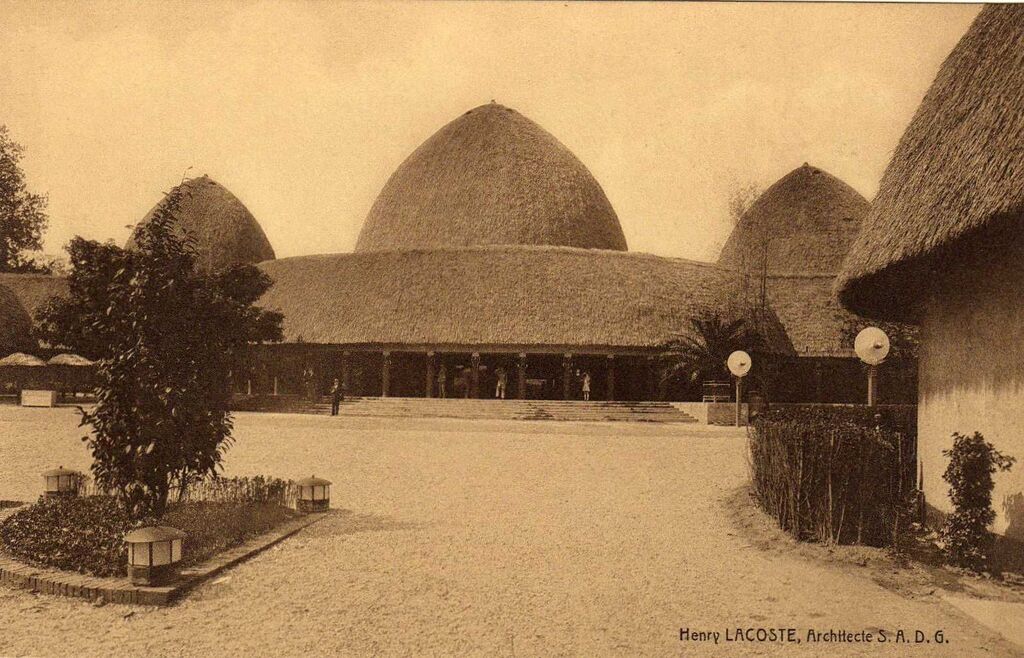
French Coonial Exhibition 1930, Paris (c) Remo Kurka
Before the Great Empires
For thousands of years, communities lived throughout the region that is now Guinea.
The landscape provided opportunities for:
- agriculture
- fishing
- hunting
- trade
- settlement
The great rivers of West Africa were especially important. They created routes of movement and communication, allowing people, goods and ideas to travel across vast distances.
Over time, communities developed sophisticated systems of leadership, social organisation and cultural expression.
These early societies laid the foundations for the kingdoms that would later emerge.
The Ghana Empire
One of West Africa's Earliest Great States
The ancient Ghana Empire was one of the first major empires of West Africa.
Despite its modern name, it was not located in present-day Ghana. Its heartland was further west, in parts of modern Mauritania and Mali.
However, its influence extended across a much wider region through trade networks that connected many communities, including those in areas linked to modern Guinea.
The Power of Trade
The wealth of Ghana came largely from its position within trans-Saharan trade.
Merchants exchanged:
- gold from southern regions
- salt from the Sahara
- textiles
- metals
- other valuable goods
These networks connected West Africa with North Africa and the Mediterranean world.
The trade routes helped create wealthy cities and encouraged the growth of political institutions.
The Mali Empire
The Great Mandé Civilisation
Among all the historical states connected with Guinea, few have left a deeper cultural legacy than the Mali Empire.
Founded in the thirteenth century, Mali became one of Africa's greatest empires.
Its history is closely connected with the Mandé peoples, whose traditions remain an important part of Guinea's cultural identity today.
Sundiata Keita and the Birth of Mali
The foundation of the Mali Empire is preserved through one of Africa's greatest oral traditions: the Epic of Sundiata.
According to the epic, Sundiata Keita united the Mandé peoples and established a powerful new state after defeating the Sosso ruler Soumaoro Kanté.
Whether heard through a griot's performance or studied through historical research, the story of Sundiata represents a central part of West African cultural memory.
Mali's Golden Age
Under rulers such as Mansa Musa, the Mali Empire reached extraordinary levels of wealth and influence.
Mali became famous throughout the medieval world for:
- gold production
- scholarship
- trade
- architecture
- Islamic learning
Although the empire's major cities were located further east, its influence reached into regions connected with modern Guinea.
Trade routes linked the empire with forest zones, coastal areas and mountain regions.
The Role of the Griot Tradition
One of the greatest cultural legacies of the Mandé world is the tradition of the griot.
Griots are historians, storytellers, musicians and guardians of oral knowledge.
For centuries, they preserved:
- genealogies
- royal histories
- important events
- cultural values
Through music and storytelling, griots ensured that history survived across generations.
This tradition remains alive in Guinea today.
The Songhai Era and Wider West African Connections
After Mali's decline, the Songhai Empire became the dominant power in West Africa.
Although its centre was located further east, the wider region continued to be connected through trade, scholarship and cultural exchange.
The history of Guinea cannot be separated from this broader West African world.
Ideas, languages, religious traditions and commercial networks continued to cross regional boundaries.
The Fulani and the Rise of Fouta Djallon
A New Political and Cultural Power
One of the most important chapters in Guinea's history began in the highlands of Fouta Djallon.
From the seventeenth century onwards, Fulani communities became increasingly influential in the region.
Through political organisation and Islamic scholarship, a new state emerged in the eighteenth century.
The Imamate of Fouta Djallon
The Imamate of Fouta Djallon was founded in the early eighteenth century following a series of religious and political movements.
Among its founding leaders was Karamokho Alfa, who established a new Islamic state in the highlands.
Later, Ibrahim Sori strengthened the state's political organisation.
The Imamate developed into a powerful centre of:
- Islamic education
- agriculture
- political administration
- cultural influence
A Centre of Learning
Fouta Djallon became known throughout West Africa as a centre of Islamic scholarship.
Religious schools attracted students and scholars, creating intellectual networks that connected Guinea with other parts of West Africa.
The region's heritage of learning remains one of its most important contributions to African history.
The Kingdoms and States of the Guinea Region
The history of Guinea was never shaped by only one power.
Many communities developed their own political systems and traditions.
Among important historical societies were:
The Susu States
The Susu people established important political centres along the coast and in Lower Guinea.
Their history is closely connected with coastal trade and cultural exchange.
The Baga and Coastal Communities
The communities of coastal Guinea developed distinctive artistic traditions and social structures adapted to the Atlantic environment.
Their masks, sculptures and ceremonies remain important elements of Guinea's cultural heritage.
The Kissi and Forest Peoples
In Forest Guinea, communities such as the Kissi and Toma developed traditions deeply connected with forest environments.
Their histories demonstrate the diversity of political and cultural systems across Guinea.
Samori Touré and the Last Great Resistance State
A Warrior, Leader and Historical Figure
One of the most famous figures connected with Guinea's history is Samori Touré.
Born in the nineteenth century, Samori created a powerful state in West Africa and became one of the strongest opponents of French colonial expansion.
His influence extended across parts of modern Guinea, Mali and Côte d'Ivoire.
The Wassoulou Empire
Samori Touré established the Wassoulou Empire, a highly organised state supported by military strength and trade networks.
He built:
- an effective army
- administrative structures
- diplomatic relationships
For many years, he resisted French expansion.
His story remains one of the most important examples of African resistance during the colonial period.
Continue ReadingGUINEAPEDIA Tips – Explore Guinea
The Legacy of Guinea's Kingdoms and Empires
The great kingdoms and states of West Africa were not only political organisations.
They created lasting cultural legacies.
Their influence can still be seen in:
- languages
- music
- storytelling
- craftsmanship
- social traditions
- religious scholarship
Modern Guinea carries these histories within its identity.
A song performed by a musician, a story told by an elder, a traditional ceremony or a handcrafted object may all contain echoes of centuries of history.
Guinea's Place in African History
Guinea is sometimes described only through its modern political history.
But its deeper story is much older.
It is a story of:
- ancient communities
- powerful kingdoms
- intellectual traditions
- trade networks
- cultural creativity
- resistance and resilience
The Republic of Guinea stands upon the foundations of many generations who shaped this land before modern borders existed.
Its mountains, rivers and forests have witnessed the rise and transformation of some of Africa's greatest historical movements.
To understand Guinea is to understand a vital chapter of Africa's past.
🇬🇳 Guinea Independence Day